

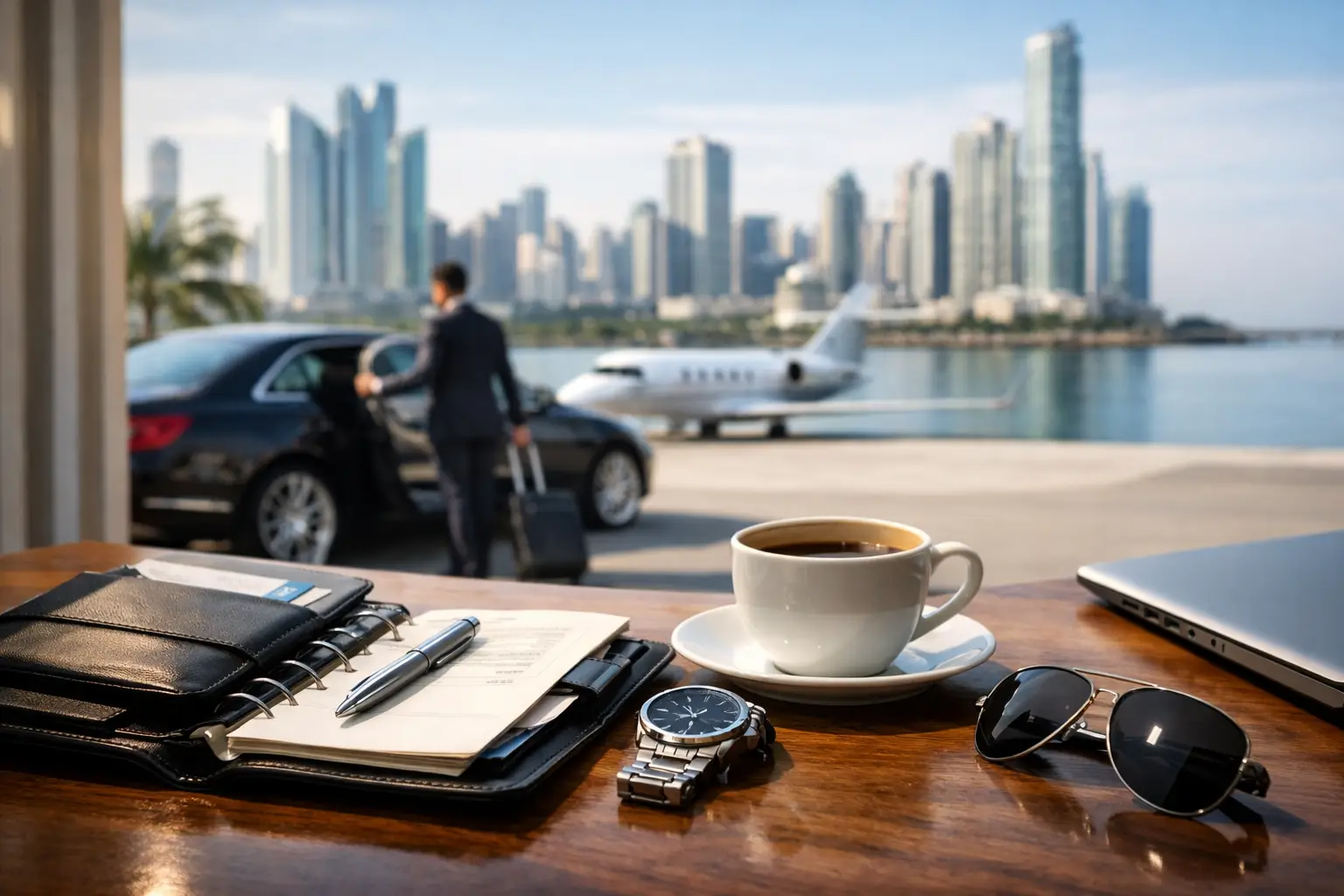
A board meeting in Panama City, a site visit in the interior, and a dinner worthy of an important investor can all fit into one trip. The difference lies in how you arrange an executive itinerary: not as a crowded schedule, but as a protected framework for decisions, relationships, and recovery.
For executives, entrepreneurs, and investors, time in Panama often carries more than one purpose. A visit may begin with negotiations and end with a private day on the water. It may include exploring a future residence, meeting local partners, or bringing family along without asking them to adapt to a business-first rhythm. The itinerary should hold all of it with discretion, precision, and room to breathe.
Arrange an executive itinerary around the real objective
A strong executive itinerary starts before flights are considered. The first question is not where to go. It is what the visit needs to accomplish.
For some guests, the priority is concentrated business time: airport arrival, hotel or private residence, meetings, secure transfers, and carefully selected dinners. For others, the purpose is exploratory. They need to understand Panama as a place to invest, establish a base, or return with family. In that case, the schedule should reveal the country through its most relevant settings, from the financial district and residential neighborhoods to coastal escapes that show a different pace of life.
Privacy also changes the shape of the plan. A public restaurant may be perfect for a relaxed evening with friends, yet unsuitable for confidential conversation. A commercial flight may be practical for a straightforward route, while private aviation becomes the better choice when timing, comfort, and discretion matter more than a lower fare. There is no universal executive itinerary. There is only the right degree of access and support for the purpose at hand.
Protect the hours that matter most
The most common planning mistake is treating every available hour as usable. On paper, a 10:00 a.m. meeting, a cross-city lunch, and a late-afternoon appointment can appear manageable. In practice, traffic, security procedures, hotel check-in, weather, and the simple mental cost of constant movement can weaken the day.
An intelligently arranged itinerary protects transition time. It places important meetings when the guest is freshest, schedules transportation with realistic buffers, and leaves enough space after a long-haul arrival for recovery or preparation. This is particularly valuable in Panama, where the contrast between the capital, the airport corridor, the canal area, and coastal or mountain destinations requires thoughtful routing.
A private driver is more than a vehicle in this context. It is continuity. The executive does not need to confirm each pickup, explain a destination repeatedly, or make decisions between appointments. The day continues quietly in the background while attention remains on the people and outcomes that brought them to Panama.
Use one anchor per day
Each day should have one non-negotiable anchor: a key presentation, property viewing, board dinner, investor conversation, or private excursion. Everything else should support it.
This approach prevents leisure plans from becoming another obligation. If a client has a critical morning meeting, a sunset yacht departure may be preferable to an early, full-day outing. If the purpose is a family celebration, business calls may be contained to a short, protected window rather than interrupting the entire experience. Luxury is not filling the calendar. It is having the freedom to give the right moment your full attention.
Build privacy into every movement
Executive travel calls for quiet coordination. It is often the details no one notices that make the experience feel composed: a driver waiting in the correct location, a preferred room prepared before arrival, a dining table selected away from the busiest flow of the room, or luggage handled without adding friction to the day.
Arrival deserves special attention. After an international flight, guests should not be navigating uncertain transport, standing in lines for basic arrangements, or receiving a long list of questions. A clear arrival plan considers flight timing, airport procedures, destination, luggage, companions, and the level of assistance desired. For certain schedules, private aviation or a private terminal experience may preserve valuable time and provide a calmer beginning.
The same care applies to departures. A final breakfast, a short wellness appointment, or a last business call can be enjoyable only when the transfer and airport timing are already under control. An itinerary that ends in a rush can color the entire memory of a visit.
Choose access, not just activities
A generic itinerary offers places. A considered executive itinerary offers the right way to experience them.
Panama can be enjoyed through a private yacht day that reaches quiet water and virgin beaches, a chef-led dinner shaped around the guest’s preferences, or a wellness session arranged after an intense series of meetings. For a visitor with limited time, a helicopter or private flight can transform a distant destination from impractical to possible. For someone seeking a slower stay, the better decision may be to remain close to Panama City and create an unhurried evening of exceptional dining and conversation.
The trade-off is always context. More movement can deliver variety, but it can also fragment the trip. Staying in one setting can feel less ambitious, yet it often creates more meaningful space for rest, connection, and spontaneous decisions. A trusted concierge should advise, not simply say yes to every request.
Plan for the people traveling with you
An executive itinerary rarely serves only one person. A spouse, children, colleagues, clients, or security team may all have different needs. The plan must respect those differences without making anyone feel like an afterthought.
For families, this can mean parallel experiences that reconnect at the right times. While one guest attends meetings, others may enjoy a private cultural visit, a beach afternoon, luxury shopping, or an age-appropriate adventure with dependable guidance. The itinerary then reunites everyone for a dinner, a sunset cruise, or a relaxed day designed to be shared.
For corporate groups, the challenge is slightly different. The schedule needs enough structure to keep the program on track, while avoiding the stiffness of a conventional group tour. Private transportation, flexible dining, and well-paced experiences allow colleagues to engage naturally. That is particularly valuable when the trip is meant to build trust, reward performance, or welcome international partners.
Keep one layer of flexibility
Even the best plans need room for reality. A meeting can run long. Weather can alter a boating plan. A client may decide that a neighborhood visit should become a serious residential search, or that a productive lunch should continue into the evening.
Flexibility is not an excuse for vague planning. It is the result of having capable alternatives prepared in advance. If rain changes an outdoor plan, there should be a refined indoor option. If a dinner preference changes, the response should be a confident adjustment, not a scramble. If an investor requests an unexpected meeting, transportation and venue options should be considered quickly and discreetly.
This is where a local, high-touch concierge becomes essential. Pa’ Ti Panamá designs each element around your pace, priorities, and preferred level of privacy, coordinating the details so your attention stays where it belongs. Whether your Panama visit is entirely business or deliberately blends work with luxury tropical escape, the experience should feel personal rather than programmed.
The details to share before planning begins
The quality of an itinerary improves when the planning team receives the right context early. Share the trip’s primary objective, essential appointments, arrival and departure preferences, number of travelers, dietary needs, accommodation expectations, and any privacy or security considerations. It also helps to be candid about energy levels and travel style.
Some clients want a full program because they have only two days in the country. Others value an open afternoon more than another attraction. Neither preference is better. The goal is to design a stay that feels as if Panama is meeting you at exactly the right tempo.
When you arrange an executive itinerary with intention, every transfer, table, meeting, and private experience has a purpose. The finest plan does not ask you to manage it. It gives you the space to arrive prepared, move calmly, and leave Panama with the conversations, impressions, and possibilities that matter most.